
Satay Sauce: A Kitchen and Sourcing Guide for Foodservice
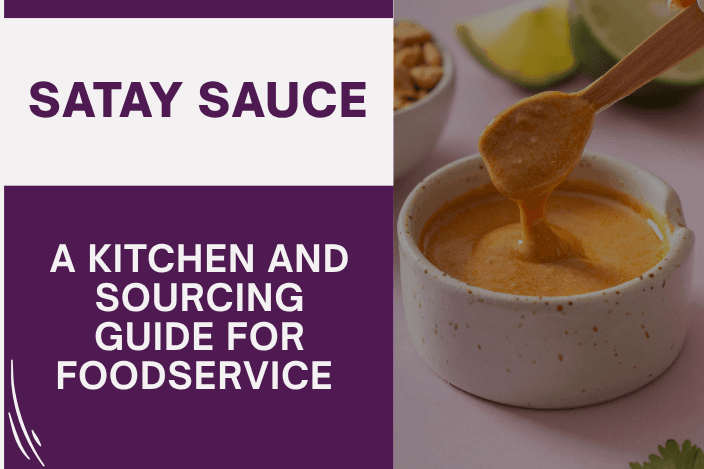
Satay sauce is a peanut based sauce from Indonesia and Malaysia, built from peanuts, coconut milk, soy sauce, and lime. A kitchen can make it in batch by warming peanut butter, coconut milk, and soy sauce together for five to ten minutes, or buy it ready made for consistent results across every service. Either way, it works as a starter, a dip, or a stir fry sauce.
Satay sauce is a fixture on menus across the UK, from Thai and Malaysian restaurants to Chinese takeaways and pan-Asian grocers. For a kitchen adding it to the menu or a retailer stocking it on shelf, the questions are practical: what goes into it, how it scales, which style suits your customers, and whether to make it in house or buy it in. This guide covers all four.
What Is Satay Sauce Made Of?
Satay sauce is made from ground or blended peanuts, coconut milk, soy sauce, and a sour note such as lime juice or tamarind.
The exact mix changes by country, which matters when a menu needs to match a cuisine or a customer base. The Indonesian version, bumbu kacang, uses hand pounded roasted peanuts, sweet soy sauce (kecap manis), and chilli. The Malaysian and Singaporean version is thinner and leaner, built on peanut butter or crushed peanuts, coconut milk, and often a spoon of curry powder. Both grew up alongside satay, the grilled meat skewers sold at street stalls across Southeast Asia, and the sauce was made to be dipped or poured over the skewers rather than eaten alone.
How to Make Satay Sauce in Batch
Mix peanut butter, soy sauce, and curry powder, then warm the mix with coconut milk for five to ten minutes, stirring, until smooth and thick. Stir in lime juice off the heat. The method scales up cleanly for batch cooking, in the ratios below per litre of finished sauce.
| Ingredient | Amount per litre | Notes |
| Peanut butter (smooth) | 600g | Crunchy works too and adds texture |
| Coconut milk | 1kg | Full fat gives a thicker sauce and a better shelf hold |
| Soy sauce | 200ml | Light soy for colour, dark for a deeper flavour |
| Lime juice | 200ml | Stir in last, off the heat |
| Curry powder | 60g (optional) | Gives a Malaysian style sauce |
1. Mix the base. Stir the peanut butter, soy sauce, and curry powder together before it goes anywhere near heat, so the sauce stays smooth.
2. Warm it through. Add the coconut milk and heat gently, stirring, for five to ten minutes, until the sauce thickens to a coating consistency.
3. Finish and cool. Take off the heat, stir in the lime juice, then cool and store to your kitchen's food safety procedure before service.
For kitchens that want consistency across every batch without the prep time, Tiger Tiger's own Malaysian satay sauce is ready to warm through and serve, and is available by the case through the trade register.
Peanut Butter: Smooth or Crunchy?
Either works. The difference is texture, not flavour, and the choice can be led by what suits the dish going out.
| Type | Result | Best for |
| Smooth peanut butter | Silky, easy to pour and easy to portion | A dip or a sauce for noodles |
| Crunchy peanut butter | Flecks of peanut through the sauce | A sauce served with skewers |
| Whole roasted peanuts, blended | Coarser, more traditional texture | An Indonesian style sauce or a signature house recipe |
Is Satay Sauce the Same as Peanut Sauce?
Satay sauce and peanut sauce are closely related, not identical terms, and menu copy should not use them interchangeably. Peanut sauce is the wider group, used for dishes such as gado-gado. Satay sauce is a peanut sauce made specifically to go with satay skewers, usually built with soy sauce and a curry note that a plain peanut sauce does not always carry.
What Satay Sauce Do Chinese Takeaways Use?
UK Chinese takeaways usually serve a thinner, sweeter peanut sauce, closer to the Malaysian style, thickened with cornflour and sweetened with sugar. It is milder and less textured than an Indonesian version made with hand pounded peanuts, and it holds well under a heat lamp, which is why it suits a takeaway counter.
Batch Storage, Shelf Life and Prep-Ahead
Made in house, satay sauce keeps covered and chilled for up to three days, and freezes well in an airtight container for up to three months, which makes it a good candidate for prep-ahead batch cooking. Thaw in the fridge overnight and warm gently, adding a splash of water or coconut milk if it has thickened too much. Label each batch with the make date under your kitchen's normal date coding, since a house made sauce will not carry the shelf life of a commercially produced one.
Menu Uses for Satay Sauce
- A starter or sharing dish with chicken, pork, beef, or tofu skewers
- A dip alongside prawn crackers or spring rolls
- Stirred through noodles or rice as a quick sauce base
- Drizzled over a salad such as gado-gado
- Bottled or boxed as a retail add-on next to skewers or noodle kits
Tiger Tiger also stocks light soy sauce and tinned coconut milk by the case, alongside the rest of the sauce and canned range, so a kitchen can source every ingredient from one supplier.
Is Satay Sauce Gluten Free or Vegan, and Why It Matters for Your Menu
A basic recipe made with peanut butter, coconut milk, soy sauce, and lime is vegan. Some traditional versions add fish sauce, so check the ingredients before it goes on an allergen matrix. For a gluten free version, swap regular soy sauce for tamari or a gluten free soy sauce, since the rest of the ingredients are naturally free from gluten. Under Natasha's Law, any pre-packed for direct sale item made in house needs a full ingredients label, including peanuts, soya, and any gluten containing soy sauce, so keep a written recipe on file for every batch.
FAQ
What is satay sauce made of? Ground or blended peanuts, coconut milk, soy sauce, and lime juice or tamarind, with curry powder added in the Malaysian style.
How do you make a simple satay sauce? Warm peanut butter, coconut milk, and soy sauce for five to ten minutes, then stir in lime juice off the heat. The method scales up cleanly for batch production.
What satay sauce do Chinese takeaways use? A thinner, sweeter peanut sauce closer to the Malaysian style, thickened with cornflour, chosen because it holds well under a heat lamp.
Can you freeze satay sauce? Yes, in an airtight container for up to three months, which makes it suited to prep-ahead batch cooking. Thaw in the fridge and reheat gently.
Is satay sauce vegan? The basic recipe is. Some traditional versions add fish sauce, so check before it goes on an allergen matrix.
Can I buy satay sauce ready made for my kitchen? Yes. A ready made sauce gives every site the same taste and consistency without batch-to-batch prep, and can be ordered by the case.
Order satay sauce and the ingredients to make it in house by the case through the Tiger Tiger trade register, or browse the full range of canned and bulk pan-Asian ingredients.